


 Call Us
 Directions
Can You Own a Plug In Hybrid Without Home Charging

A South Bay shopper does not need to own a private garage to consider a plug-in hybrid. The more useful
question is whether dependable charging fits the places you already park. An apartment resident with reliable
workplace charging may have a workable routine; someone with a driveway but no suitable electrical supply
still has planning to do.
For Manhattan Beach Toyota shoppers, a PHEV charging decision should begin with access, time and cost. A
charging station appearing on a map answers only one part of that question. This guide helps you evaluate the
rest before choosing a vehicle or purchasing equipment.
Start with permission and dependable access
List your realistic charging locations: home, work and places you visit regularly. For each, identify who controls
the parking space and charging equipment. Ask whether you may use it, when it is accessible and whether the
space must be reserved or shared.
If you rent or live in a condominium, discuss the actual arrangement with the property manager or association
before building your purchase decision around it. Avoid treating a nearby outlet as an approved vehicle-
charging setup. A written explanation of the available arrangement is more useful than an assumption based
on what another resident does.
For workplace charging, ask what happens when spaces are full, whether personal vehicles are eligible and
whether access continues outside your normal shift. A convenient option today should still be evaluated as a
service that may change.
Match charging time to parking time
The Department of Energy’s home-charging guide, checked November 12, 2026, distinguishes Level 1 charging
from faster Level 2 equipment. It notes that suitable Level 1 charging can meet some drivers’ overnight needs
and that an electrician can assess electrical capacity for a home installation. Equipment and installation must
suit the location.
Do not choose equipment solely because its advertised output is high. Ask for the charging estimate for the
exact model, starting charge and equipment you intend to use. A car parked overnight presents a different
question from one parked during a short lunch break.
Create a realistic weekly calendar. Mark when the vehicle would actually be connected, not simply when a
charger is somewhere nearby. If using a station requires moving the car halfway through a workday, include
that task in your plan. The goal is a routine you will maintain when you are busy.
Check public charging before relying on it
Visit a likely charging location at roughly the time you expect to use it. Look at the parking arrangement,
posted conditions and how the payment process works. Verify compatibility using the vehicle manufacturer’s
information and the charging provider’s current instructions.
The federal FuelEconomy.gov charging guide, checked November 12, describes different charging options. That
does not mean every PHEV accepts every charging type. Confirm the connector and supported charging
capability for the particular vehicle; do not assume a fast charger will work simply because the car plugs in.
For a South Bay routine involving errands in El Segundo or Redondo Beach, judge whether charging fits the
stop itself. Include any parking or session fees in your comparison. A station can be convenient without being
the lowest-cost option, and those are separate reasons to use it.
Make a backup plan before purchasing
Write down what you would do if your main charging location were unavailable for a week. Would another
dependable option fit your routine? Would you accept more gasoline driving during that period? Would the
interruption change which powertrain you prefer?
This exercise helps distinguish occasional inconvenience from a recurring ownership problem. Ask the
dealership to demonstrate the vehicle’s hybrid operation and explain how charging frequency affects the way
you would use it. Avoid basing a decision on a perfect week that rarely occurs.
If an installation is part of the plan, get a site-specific assessment before assuming a cost or completion date.
Keep the vehicle purchase and electrical work as separate estimates so each decision remains clear.
Shopper questions
Do I automatically need a Level 2 home charger?
No. Suitability depends on the vehicle, your available parking time and the electrical setup. Check
manufacturer guidance and have the site assessed where needed.
Can workplace charging replace home charging?
It can be part of a workable plan if access, compatibility and connection time meet your needs. Test those
assumptions before relying on it.
What if I cannot charge regularly?
Compare a conventional hybrid alongside the PHEV. Ask which option better fits your actual access and driving
pattern instead of assuming plug-in capability will be used often.
Bring your charging plan to Manhattan Beach Toyota
Review our new vehicle listings, then contact Manhattan Beach Toyota with your parking and charging
questions. Our team can help you discuss vehicle requirements; a qualified electrical professional should
assess any proposed installation.
CATEGORIES
TAGS
How South Bay Drivers Can Compare Hybrids PHEVs and EVs

Choosing between a hybrid, a plug-in hybrid and an all-electric vehicle starts with how you drive and where
you can charge. For a Manhattan Beach household, the right comparison includes the weekday commute,
shared-car arrangements and longer trips. The largest range number or most impressive efficiency figure
cannot answer all those questions by itself.
Before comparing Toyota options, agree on the job the vehicle needs to do. Will it be your only car, a daily
commuter or the vehicle everyone uses on weekends? A clear answer makes it easier to compare the practical
trade-offs without getting lost in terminology.
Understand the three powertrains
The Department of Energy’s electric-vehicle overview, checked November 12, 2026, explains the basic
distinctions. A conventional hybrid combines an engine and electric motor without external charging. A PHEV
adds the ability to charge from an external source while retaining its engine. A battery-electric vehicle uses
stored electricity for propulsion and has no gasoline engine.
That gives you an initial decision point. If dependable charging is unavailable, examine a conventional hybrid
closely. If charging fits your routine and you want to retain gasoline capability, include a PHEV. If you want an
all-electric vehicle, evaluate charging for both ordinary days and longer journeys.
These are starting points for comparison, not rankings. The vehicle’s seating, cargo space, comfort and price
still need to work for your household.
Compare a normal week and a demanding week
Write out two versions of your schedule. The first should reflect ordinary driving between home, work and
errands. The second should include an unusually busy week, a longer family visit or a change in who drives the
car.
For each candidate, ask how you would replenish energy during both weeks. Include the time spent parking,
connecting, refueling or making an extra stop. A hypothetical charging opportunity is less useful than one you
know you can access when needed.
If your household has two vehicles, consider their roles together. Which one needs to handle the longest trips?
Which one stays at a location where charging is available? You may find that the strongest choice for one
driver differs from the strongest choice for the other.
Read PHEV efficiency figures carefully
The FuelEconomy.gov PHEV label guide, checked November 12, distinguishes gasoline MPG from MPGe, an
energy-equivalent efficiency measure. MPGe is not the number of miles a vehicle travels on a gallon of
gasoline. The label also helps separate electric-driving information from gasoline operation.
When comparing a PHEV with a conventional hybrid, examine its gasoline-operation rating as well as its
electric efficiency and range. Your charging frequency determines how relevant each mode is to your routine.
Do not compare one vehicle’s MPGe directly with another’s MPG and treat the difference as a promised fuel-
bill reduction.
Ask to see the label for the exact model year and configuration. Ratings from another trim or an older model
may not describe the vehicle you are evaluating.
Build a cost comparison from your own inputs
Start with written vehicle quotes, then add any charging equipment or installation that your situation requires.
For operating costs, use your expected mileage, actual electricity rate and a stated gasoline-price assumption.
If public charging is part of the plan, include its current fees separately.
Keep those assumptions visible. A comparison based on inexpensive home charging will not describe a driver
relying on a differently priced public service. Likewise, a calculation based on daily charging will not describe a
household that plugs in only occasionally.
Treat the result as an estimate. Ask how the conclusion changes if you drive farther, charge less often or pay a
different energy rate. A choice that still works under realistic variations is easier to feel comfortable with than
one depending on a single optimistic scenario.
Use the test drive to settle practical questions
Bring the items and people that matter to your decision where practical. Check child-seat access, usual cargo
needs and visibility from your normal driving position. Have each regular driver try the controls and ask how to
recognize the vehicle’s operating state.
For plug-in options, include a charging demonstration. For every candidate, request the applicable
maintenance schedule and warranty information. Do not assume that different powertrains have identical
ownership requirements or that an electrified vehicle needs no maintenance.
Shopper questions
Is a PHEV always the least expensive choice?
No. Compare the purchase price and your expected energy use, charging costs and ownership requirements.
There is no universal savings figure.
Does an EV have a gasoline backup?
A battery-electric vehicle does not. A plug-in hybrid retains an engine; identify the powertrain before
comparing listings.
Which option should I test first?
Start with the vehicle that meets your space needs and realistic charging access, then compare another
powertrain to test your assumptions.
Compare Toyota options in Manhattan Beach
Explore Manhattan Beach Toyota’s new inventory and contact the team to discuss a focused comparison.
Confirm exact models, equipment and availability before your visit.
CATEGORIES
TAGS
2027 Toyota C-HR Offers Two Ways to Choose a Compact Electric SUV

Toyota’s 2027 C-HR gives South Bay shoppers a compact electric SUV to consider, with a decision that goes
beyond choosing a color: does the SE meet your everyday needs, or are the XSE’s additional features worth
prioritizing? Toyota’s August 6, 2026 announcement describes a carryover model, unchanged from the
preceding model year. This is a closer look at that announced lineup, not a claim of a new November redesign.
Start with what the C-HR is
Toyota’s 2027 C-HR press kit, dated August 6, identifies it as a battery-electric vehicle with standard all-wheel
drive and 338 net combined system horsepower. It comes in SE and XSE grades and offers up to 25.3 cubic feet
of cargo space behind the rear seats.
That last figure is useful when comparing vehicles for daily life. It describes space with the rear seats available
for passengers, rather than a larger number that requires folding them. For a household carrying people and
bags together, the seating arrangement behind a cargo figure matters as much as the figure itself.
Key takeaways
Compare SE and XSE using the features you expect to use regularly.
Check luggage space with the seats positioned for your real passenger needs.
Confirm a charging plan and specific vehicle availability before arranging a purchase.
What separates SE and XSE
In its August 6 model announcement, Toyota lists heated front seats, a heated steering wheel, a power liftgate
and a 14-inch touchscreen among SE equipment. XSE adds items including a power passenger seat, driver
memory and a Panoramic View Monitor. A panoramic fixed glass roof with a power sunshade is available on
XSE; it is not something to assume every XSE includes.
Those differences suggest a straightforward way to shop. If two drivers share the vehicle, ask each to set up
the seat and mirrors. If a passenger frequently rides along, have that person try their seating position too. A
feature is easier to value when you can connect it to a repeated task rather than a hypothetical future use.
For parking assistance, ask to see the actual camera display while stationary and learn what it does and does
not show. Treat it as help for the driver, not a substitute for checking surroundings. Compare your confidence
using the equipment with your comfort seeing directly out of the vehicle.
Give compact dimensions a real world test
Toyota lists the C-HR at 177.9 inches long, 73.6 inches wide and 63.8 inches high in the announcement. Use
those dimensions to begin planning, then verify the clearances that matter for your own parking space,
including mirrors and room to open doors.
For a Manhattan Beach or Hermosa Beach household, a useful test is the parking routine itself. Where does
the driver step out? Can a passenger open a door comfortably? Will you need to move another vehicle to
reach charging equipment? Measuring those spaces before an appointment can turn a vague concern into a
question the dealership can help answer.
Bring a typical load rather than packing for the largest trip you can imagine. Work bags, groceries, a stroller or
sports equipment can show whether the cargo opening and floor shape work for you. Check which items fit
without blocking passenger space or requiring an awkward loading motion. Also try the rear seating with the
front seats adjusted normally.
Separate the vehicle decision from the charging assumption
Because this C-HR is battery-electric, charging belongs in the purchase discussion from the start. Ask how the
exact vehicle would fit the place you park most nights. If installation is being considered, obtain a qualified
electrician’s assessment and any required property approval before treating home charging as settled.
For a shared garage or workplace arrangement, confirm access and the terms with the property or equipment
operator. Make a backup plan that fits your schedule. The goal is to understand the routine you will actually
live with, rather than choosing a vehicle around a charging arrangement that has not been confirmed.
Shopper questions
Is the 2027 C-HR newly redesigned this month?
No. Toyota’s dated announcement describes an unchanged model for 2027.
Will every XSE have the glass roof?
No. Check the specific vehicle’s optional equipment before making that assumption.
Are vehicles already available at Manhattan Beach Toyota?
Toyota’s August announcement projected national arrivals beginning in September. That guidance does not
verify current local stock. Ask the dealership about a particular listing.
Compare the C-HR with your own priorities
Explore Manhattan Beach Toyota’s new vehicle listings and contact the dealership to discuss SE and XSE
availability. Bring your parking measurements and feature priorities so the conversation starts with how you
intend to use the vehicle.
2027 Toyota Sequoia Adds New Towing Technology and Trailhunter Choice
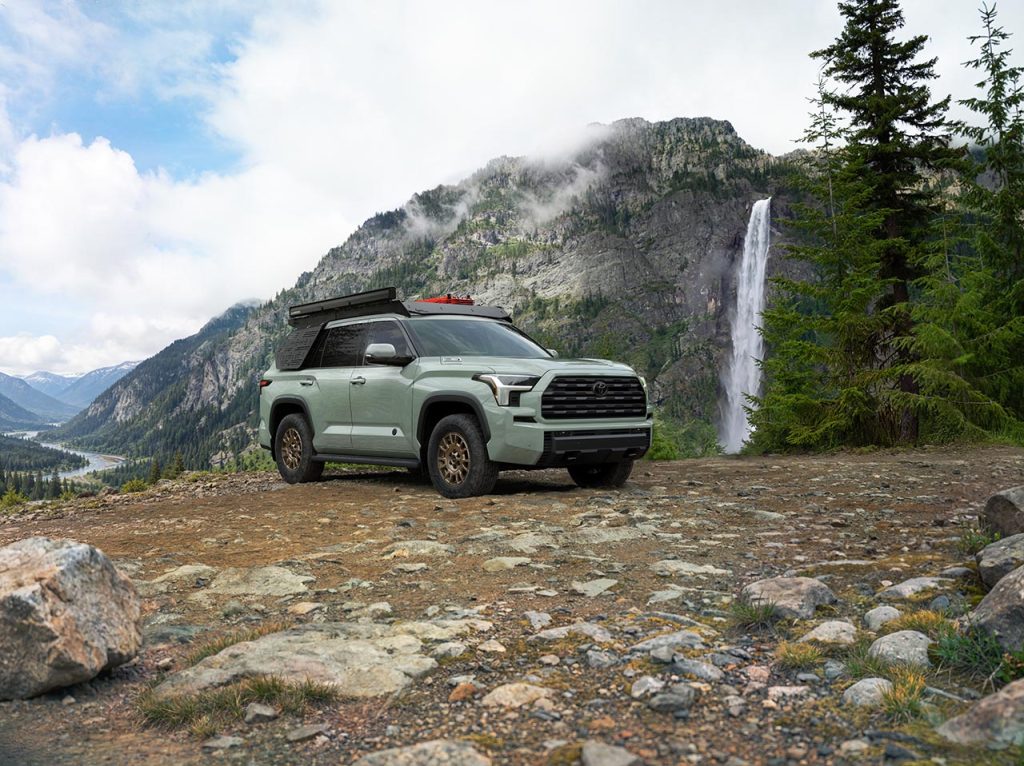 Toyota released expanded 2027 Sequoia details on November 4, 2026, outlining changes that deserve a closer
look from South Bay families shopping for a full-size SUV. The announcement builds on a summer preview with
towing technology, cabin updates and a broader choice of equipment. The useful shopping question is which
configuration fits your passengers and trailer—not simply which version has the longest feature list.
What the latest announcement adds
Toyota’s November 4 release lists a standard 14-inch multimedia touchscreen and Toyota Safety Sense 4.0.
Available towing technology includes Automated Trailer Detection and an enhanced Trailer Backup Guide.
Toyota quotes a maximum towing capacity of 9,520 pounds; that headline figure should not be applied to
every configuration or loading situation.
The company’s national arrival guidance is fall 2026. It does not confirm a particular vehicle’s arrival at
Manhattan Beach Toyota. Ask the dealership about the exact grade, equipment and delivery status you are
considering.
Key takeaways
Compare trailer-related equipment on the individual vehicle, not by model name alone.
Trailhunter is an available package based on SR5; TRD Pro is a separate grade.
Check passenger and cargo needs alongside any towing requirement.
Trailhunter and TRD Pro serve different shopping lists
Toyota first described the 2027 Sequoia updates on July 23, with that preview updated July 28. The available
Trailhunter package includes Old Man Emu suspension, Michelin LTX Trail tires, underbody protection and
front recovery hooks. Toyota also identifies Crawl Control, Multi-Terrain Select and a locking rear differential
within the package.
The same preview describes Sequoia-specific adjustable FOX QS3 shocks for TRD Pro, plus standard red tow
hooks and the new Honeycomb color. Those distinctions are a reason to compare actual equipment rather
than treating the two names as interchangeable.
For a Manhattan Beach household, start by describing the trips you genuinely expect to take. Are you towing
to a developed campground, carrying passengers on paved-road vacations, or planning travel where
specialized off-road equipment matters? Write down those uses before choosing a package. An appealing
badge is easier to evaluate once you know the job you need the vehicle to do.
Bring trailer information to the appointment
If towing is part of your plan, bring the trailer’s documentation and describe how it will be loaded. Ask the
dealership to review the specific Sequoia’s ratings and owner’s manual with you, including vehicle loading,
hitch requirements and the relevant limits for your combination. A brochure maximum is the beginning of that
discussion, not its conclusion.
Include the people and equipment that will travel in the SUV. A weekend with two adults and light luggage is a
different planning exercise from a family trip with every seat occupied. Ask for the limits and assumptions in
writing so you can compare vehicles consistently instead of relying on a remembered number from a
conversation.
For South Bay owners storing a trailer away from home, think through the complete outing: collecting it,
connecting it, loading supplies and returning it. Ask for a demonstration of the available towing interfaces and
the steps you must perform yourself. Driver assistance still requires an attentive driver; understanding a
system’s limitations is as important as seeing its display.
Test the cabin as a family space
The new touchscreen is easy to notice, but a useful appointment should also cover the controls you will use
regularly. Try adjusting audio, finding a frequently used setting and connecting your phone while parked. If two
people will share driving duties, have both try the interface.
Then move to the passenger area. Set the front seats for the people who normally drive and check the
remaining space with your usual passengers. Look at how someone reaches the rear row and where bags will
go when the seats are occupied. This gives you a more relevant impression than sitting briefly in an empty
vehicle.
Shopper questions
Is Trailhunter standard on every 2027 Sequoia?
No. It is an available SR5-based package. Confirm its presence on the vehicle’s equipment listing.
Does the maximum tow rating settle whether my trailer will work?
No. Review the exact vehicle, trailer, loading and equipment together before deciding.
Does the fall arrival window mean one is ready locally?
No. National timing and confirmed dealership availability are different facts.
Ask about the right Sequoia configuration
Browse Manhattan Beach Toyota’s new vehicle inventory, then contact the team with your passenger count,
trailer information and preferred equipment. Confirm the specific vehicle and appointment before visiting.
CATEGORIES
TAGS
Toyota-Backed IONNA Expands: An EV Charging Checklist for South Bay Drivers
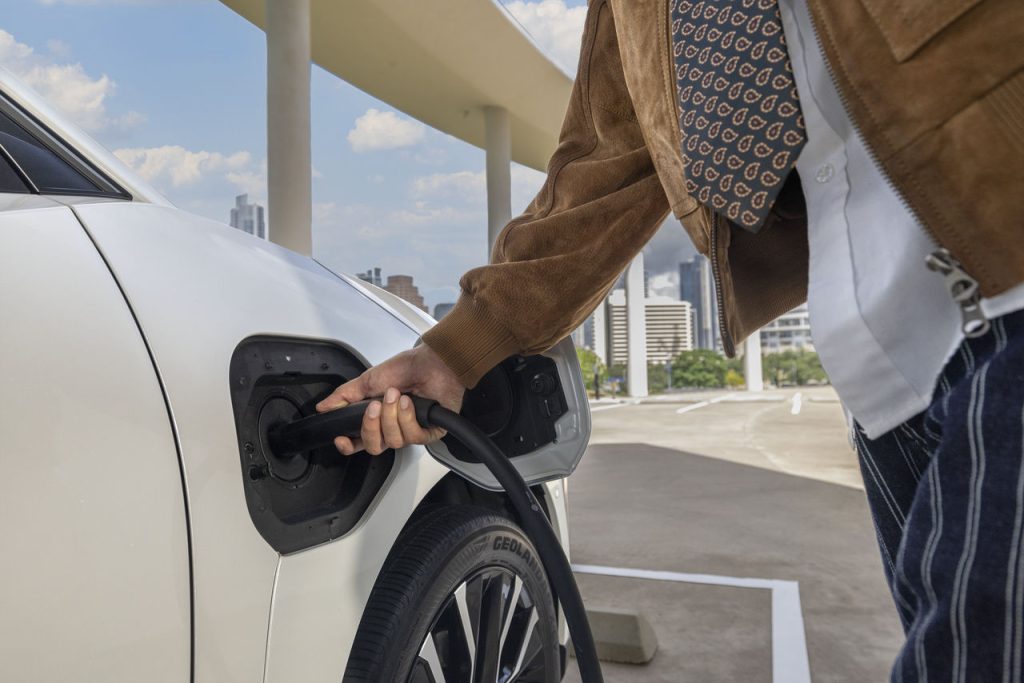 Toyota-Backed IONNA Expands: An EV Charging Checklist
for South Bay Drivers
Toyota-backed charging network IONNA reported more than 180 live U.S. locations in a September 30, 2026,
update. For Manhattan Beach drivers considering an electric vehicle, expanding infrastructure is relevant
news—but a useful charging plan still depends on the particular vehicle and route. The announcement
published by Toyota offers a snapshot of the network’s progress.
Key takeaways
IONNA reported nationwide growth, including at least 40 Circle K charging locations.
New Toyota and Lexus app integrations were announced; Plug & Charge was described as coming soon for
certain models.
The update does not establish a charging site in Manhattan Beach or confirm compatibility for your specific
vehicle.
Turn the network news into a route check
If you are researching an EV, start with one trip you genuinely expect to take. Choose the starting point,
destination, and a realistic departure time. Then work through the charging questions that would make you
comfortable taking that trip.
For a South Bay driver, that might mean comparing a weekday routine with a weekend drive out of the area.
Keep those situations separate. A convenient stop during a road trip does not automatically answer where you
would charge during a normal working week.
Before relying on any location, check its current listing through the network’s official information or a
supported service. Record the exact address, access instructions, and connector details. Also identify an
alternative that fits your route. Treat the backup as part of the plan rather than something to research after
arriving at your first choice.
Verify the vehicle and connector together
Bring the model name and model year into every compatibility question. Ask which charging connections the
vehicle supports and whether the station you have selected is suitable. If an adapter is involved, verify the
manufacturer’s guidance for that particular vehicle and charging network before depending on it.
When shopping, request a demonstration of how to identify the charging port and find the relevant
information in the owner’s materials. Ask the team to walk through a real station listing with you. Knowing
which details to check is more valuable than remembering a broad statement that a vehicle can use public
chargers.
This is also a good moment to distinguish equipment you need immediately from accessories you might use
later. Ask for the exact included items and confirm what, if anything, must be obtained separately for your
intended charging routine.
Check payment, status, and time before departure
Do the account setup before the day of your trip. Confirm the supported payment method for your chosen
station and how you will start and end a session. Ask where you can review the current rate and any additional
charges before connecting.
Practice finding station status and support information. Save the location details and know where to find
assistance if the session does not start as expected. Before departure, check the selected station again and
revisit your alternative if the listing raises a concern.
For timing, request a realistic charging estimate for your vehicle and intended arrival battery level. Do not build
the schedule around the largest number on a station listing. Ask what assumptions sit behind the estimate and
allow room in your itinerary for the stop itself, including entering the site and getting back onto your route.
If you are traveling with children or other passengers, consider what everyone needs during the break. Verify
amenities and access rather than assuming every location offers the same experience.
Questions to resolve before your first trip
Does the announcement mean I can use Plug & Charge now?
Confirm current availability, eligibility, and setup requirements for your exact vehicle. A future capability
mentioned in an announcement should not be treated as an activated feature in your car.
Where should I start if I am still choosing an EV?
Bring your weekday parking situation and one representative road trip to the shopping conversation. Ask to
review the vehicle’s charging instructions and map out a workable routine before making a decision.
Should I select only one charging stop?
Identify a practical alternative before leaving. Review both options along with your vehicle’s guidance, and
avoid making the entire trip depend on an unchecked listing.
Explore new Toyota inventory at Manhattan Beach Toyota, or contact our team to discuss the vehicle you are
considering. Bring your route and charging questions so the conversation can focus on your actual driving
needs.
Manhattan Beach Toyota is located at 1500 N. Sepulveda Blvd. in Manhattan Beach.
Source: Toyota USA Newsroom, September 30, 2026, linked above.
2027 Toyota Camry News: What Carries Over and What South Bay Shoppers Should Check
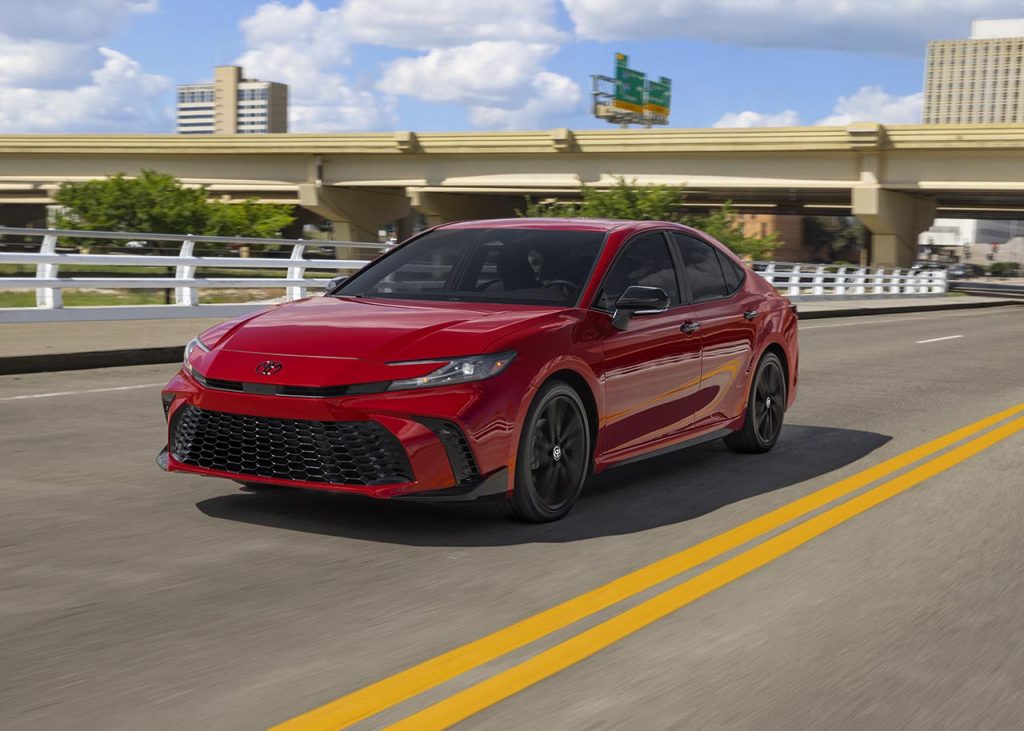
2027 Toyota Camry News: What Carries Over and What
South Bay Shoppers Should Check
Toyota confirmed its 2027 Camry lineup on October 13, 2026, with an important detail for anyone planning a
purchase: the grades, features, and options carry over. This is a model-year update, not a redesign. For drivers
shopping in Manhattan Beach, that puts the focus on choosing the right configuration and comparing actual
vehicles. Toyota’s announcement provides the official specifications and launch outlook.
Key takeaways
The exclusively hybrid lineup continues with LE, SE, Nightshade, XLE, and XSE grades.
Toyota’s 51-mpg combined estimate applies specifically to the LE with front-wheel drive, not every Camry.
National dealership arrivals are expected this fall; Manhattan Beach availability needs separate
confirmation.
Understand the carryover before comparing model years
Toyota lists 225 net-combined horsepower for front-wheel-drive models and 232 for all-wheel-drive models.
All-wheel drive is available across the lineup. The fuel-economy figure above is a manufacturer estimate.
For a shopper, the carryover announcement is an invitation to make a careful comparison rather than assume
a newer model year changes everything. If you are considering more than one model year, ask for the
equipment lists for the exact vehicles. Identify anything that matters to you, then compare the itemized quotes
on the same basis.
A useful shortlist starts with needs rather than trim names. Write down the features you use every day, the
ones you would appreciate occasionally, and the ones you can comfortably skip. This makes it easier to assess
a vehicle with added equipment without allowing every available feature to become a requirement.
Build your Camry comparison around your commute
For a South Bay household, the test is how a sedan fits into a normal week. Your routine might include an El
Segundo commute, errands around Manhattan Beach, or longer drives beyond the area. Describe that routine
before deciding what deserves the most weight in your comparison.
Start with your annual mileage. For a fuel-budget estimate, use the figures for the specific configuration, a
stated fuel price, and your own expected driving. Keep the assumptions visible. A calculation becomes much
more useful when you can see how changing mileage or fuel price changes the result.
Then consider comfort. During a test drive, adjust the seat as you would for a longer trip. Check where your
arms rest and how easily you reach the controls. Try the screen and climate controls while safely parked. Ask
yourself whether operating them feels natural enough that you would be comfortable using the vehicle every
day.
If two people regularly share the car, both should take time in the driver’s seat. A configuration that works
beautifully for one person may deserve a second look from the other.
Bring a practical checklist to the dealership
Use your visit to settle questions that photographs cannot answer. Bring measurements for any tight garage
space, and think about the room needed to open doors or unload bags. If you regularly carry a stroller, sports
equipment, or work supplies, ask to check the actual items in the trunk.
For rear-seat needs, position the front seats for their usual occupants before assessing the space behind them.
Invite a regular passenger to come along when practical. Your own seating arrangement is a better test than an
empty cabin with the seats positioned for display.
Finally, save the listings you are comparing. Record the model year, drivetrain, trim, installed equipment, and
vehicle identification number. Request itemized quotes with the same assumptions so you can identify what
accounts for any difference. This also helps keep a conversation focused when inventory listings change.
Questions to ask before choosing
Should I wait for a 2027 Camry?
Start with your replacement deadline and the configuration you want. Ask what is confirmed to be available
and compare actual equipment and quotes. Waiting makes more sense when you can identify a specific
benefit you are waiting for.
What should I ask about an incoming vehicle?
Request the exact configuration, its current status, and the latest estimated arrival information. Confirm that
the vehicle is ready to view before planning a visit around it.
How can I begin a local comparison?
Browse Camry inventory at Manhattan Beach Toyota, then contact our team with your preferred features and
timing. We can help you turn the latest model-year news into a focused shopping conversation.
Manhattan Beach Toyota is located at 1500 N. Sepulveda Blvd. in Manhattan Beach.
Source: Toyota USA Newsroom, October 13, 2026, linked above.
CATEGORIES
TAGS
Why is the New Toyota RAV4 Exclusively Hybrid? [2026]

CATEGORIES
TAGS
Why Does the 2026 Toyota RAV4 Get Such Good Fuel Efficiency?

CATEGORIES
TAGS
Toyota Prius vs Prius Prime: What’s Better for Your Family? [2026]

CATEGORIES
TAGS
2026 Toyota Prius Nightshade Edition: Features, Performance, and Style

CATEGORIES
TAGS
Why Does My Toyota Say Please Take a Break? [2026]

CATEGORIES
TAGS
7 Reasons the Toyota Corolla Is the Best-Selling Car in the World

CATEGORIES
TAGS
Toyota Corolla vs. Hybrid vs Cross: What’s the Difference?

CATEGORIES
TAGS
2025 Toyota Tacoma vs Nissan Frontier: Pickup Truck Faceoff

CATEGORIES
TAGS
2025 Toyota Tacoma Hybrid vs Nonhybrid: What’s Best for You?

CATEGORIES
TAGS
Save on Repairs with Toyota Dealership Inspections

CATEGORIES
TAGS
What is Toyota Safety Sense 3.0 and How Does it Work?

CATEGORIES
TAGS
5 Ways to Beat the Heat in Manhattan Beach this Summer

CATEGORIES
TAGS
Experience the Future: The 2024 RAV4 Prime

CATEGORIES
A Vision of Innovation: Discovering the 2024 Toyota Camry
